Unicity Everyday Protein Review: 4 Ingredients, PDCAAS 1.0, No Nonsense
By Fadi — Senior Director Distributor at Unicity International & Metabolic Health Coach · Published · Updated · 9 min read
Quick answer: Unicity Everyday Protein has exactly 4 ingredients: whey isolate, cocoa, salt, and stevia. Here's everything you need to know — PDCAAS 1.0 score, 20g protein per 100 calories, and how it fits the Feel Great system.
Unicity Everyday Protein delivers exactly what the name promises — and nothing else. In a supplement industry where protein powders routinely hide behind proprietary blends, amino-spiking, artificial sweeteners, and ingredient lists that take a chemistry degree to decode, Everyday Protein stands apart with a label so short it fits on a business card: whey protein isolate, cocoa powder (processed with alkali), salt, and steviol glycosides (stevia). Four ingredients. That's it.
This is my honest review as a Senior Director Distributor at Unicity International and metabolic health coach. I'll cover every ingredient, the PDCAAS 1.0 score, how it fits the Feel Great protocol, and who should — and shouldn't — consider it.
What Is Unicity Everyday Protein?
Everyday Protein is a whey protein isolate powder manufactured by Unicity International — the same company behind Unimate and Balance, the two clinically backed products at the core of the Feel Great System. It comes in chocolate flavour, packs 20g of protein per 32g scoop at 100 calories, and contains zero added sugar and zero artificial sweeteners. One container holds 15 servings.
It was designed specifically to integrate with time-restricted eating. You take it during your eating window — never during fasting — making it a practical tool for people following the Feel Great 16:8 protocol who want to protect muscle and hit their daily protein targets without disrupting the metabolic benefits of intermittent fasting.
The 4 Ingredients: What's Actually In the Tub
1. Whey Protein Isolate — PDCAAS Score 1.0
Whey protein isolate (WPI) is the most refined form of whey. Unlike whey concentrate, which retains fat, lactose, and non-protein solids, WPI undergoes ultra-filtration to strip everything out — leaving behind nearly pure protein. The result is ~20g protein per 32g scoop, a macro density that's hard to match.
The more important quality metric here is the PDCAAS score: 1.0. PDCAAS stands for Protein Digestibility-Corrected Amino Acid Score — the gold standard used by the FDA and WHO to assess protein quality. A score of 1.0 is the maximum possible. It means the protein contains all 9 essential amino acids (EAAs), including leucine, isoleucine, and valine (the BCAAs), in the exact proportions the human body needs for protein synthesis. Plant proteins like pea, rice, or hemp typically score 0.5–0.8. Whey isolate scores 1.0. You cannot buy a higher-quality protein source.
The ultra-filtration process also removes virtually all lactose — Everyday Protein contains less than 1% — which means most people with lactose sensitivity tolerate it without issue. It is not suitable for those with a diagnosed milk allergy.
2. Cocoa Powder (Processed with Alkali) — Flavour, Not Filler
This ingredient provides the chocolate flavour. "Processed with alkali" — also called Dutch-process cocoa — means the cocoa has been treated to reduce bitterness and improve solubility, which is why Everyday Protein mixes smoothly without clumping. There are no added sugars, no artificial chocolate flavouring, and no flavour enhancers. Just cocoa.
3. Salt — Trace Amount for Balance
Less than 45mg per serving. It serves two roles: flavour balance (salt enhances sweetness and rounds out the chocolate profile) and basic electrolyte support. At trace amounts, it's a functional ingredient, not a concern.
4. Steviol Glycosides (Stevia) — Natural Sweetness, Zero Calories
Stevia is a plant-derived, zero-calorie sweetener extracted from the leaves of Stevia rebaudiana. It replaces the sugar that most protein powders rely on for sweetness. Critically, stevia has a glycaemic index of 0 — it does not raise blood glucose or insulin. This matters for anyone following an intermittent fasting or metabolic health protocol. No aspartame. No sucralose. No acesulfame-K.
Nutritional Profile at a Glance
Per 32g scoop: 100 calories — 20g protein — <1g fat — <1g carbohydrates — 0g added sugar — <1% lactose. That's a protein-to-calorie ratio of 80%, which sits at the top of the market. Most chocolate whey concentrates land at 65–72%. The gap is meaningful if you're managing calories while trying to hit 130–160g of protein daily.
How Everyday Protein Fits the Feel Great System
The Feel Great protocol runs on a 16:8 intermittent fasting structure: 16 hours fasting, 8 hours eating. Unimate covers the fasting window. Balance is taken 10–15 minutes before the two largest meals. Everyday Protein fits anywhere inside the eating window.
The most common use case is a post-workout shake — within 30–60 minutes of training, during your eating window. But it works equally well as a mid-afternoon protein boost or blended into a smoothie. Some users stir it into overnight oats or mix it into pancake or waffle batter. The 4-ingredient list means there's no unusual aftertaste, and it blends cleanly with water, milk, or oat milk.
One non-negotiable rule: do not consume Everyday Protein during your fasting window. Like any protein source, it triggers an insulin response and breaks your fast. This is a performance protein built for the eating window — not a meal replacement.
Who Is Everyday Protein For?
It's ideal for people on the Feel Great System who are exercising and want to preserve or build lean muscle. It's also well-suited for anyone with a clean-label philosophy — those who read ingredient lists and reject products with lengthy additive lists. People with lactose sensitivity who've struggled with concentrate-based proteins often do well with WPI at sub-1% lactose. And it's a practical option for busy people who want a quick, low-calorie, high-protein option that doesn't require calorie-counting or meal prep.
It's not suitable for people with milk allergies. Vegans will need to look elsewhere — this is an animal-derived protein. And if you need a complete meal replacement with added vitamins and minerals, Everyday Protein is not designed for that role.
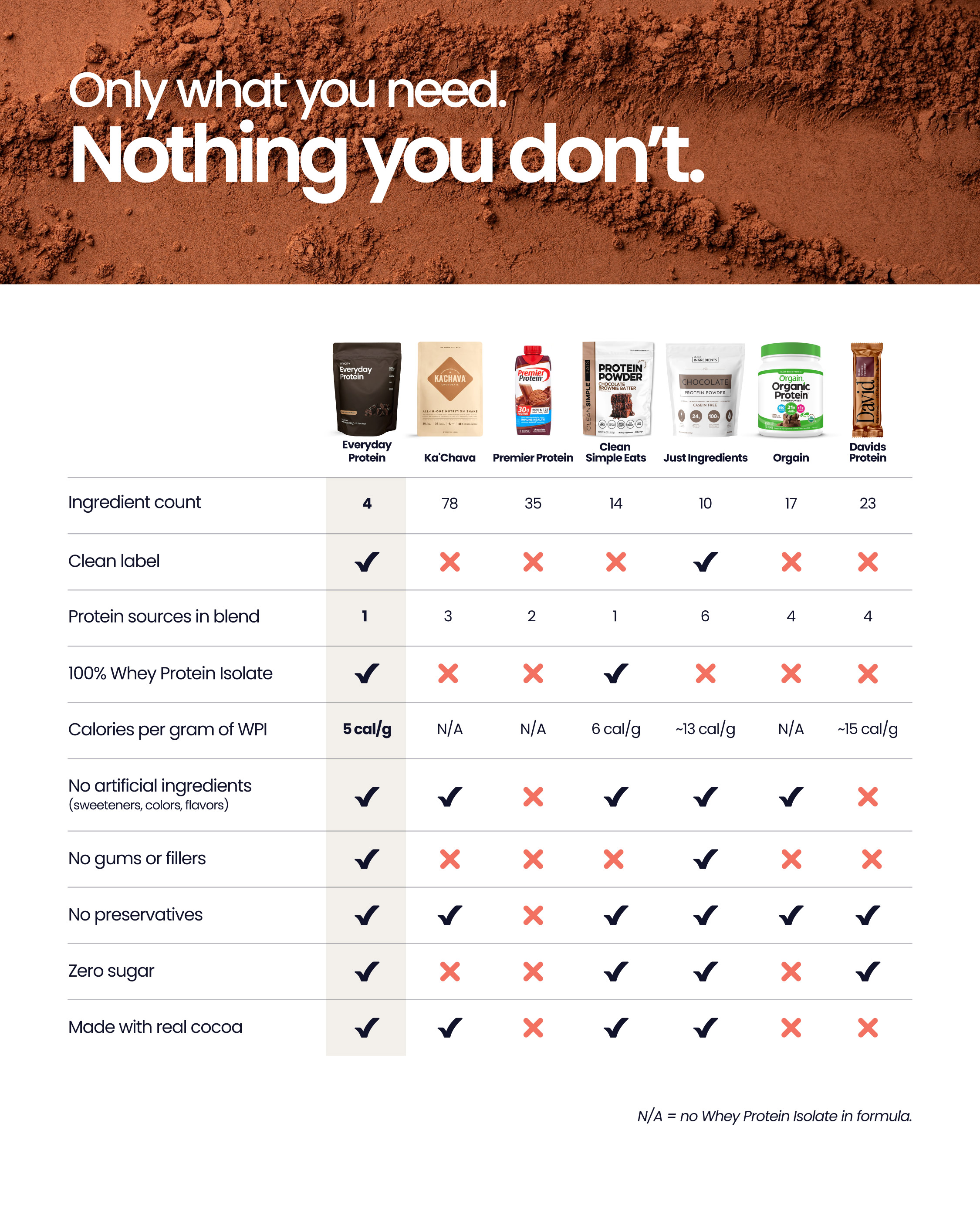
Everyday Protein vs. Generic Protein Powders
Most protein powders found at big-box retailers use whey concentrate rather than isolate. Concentrate contains 70–80% protein by weight versus 90%+ for isolate. That gap is filled by residual fat, lactose, and carbohydrates. Some budget brands also engage in "amino spiking" — adding cheap amino acids like glycine or taurine to inflate the nitrogen content (which is how protein is measured) without increasing bioavailable protein. Everyday Protein's 4-ingredient list makes amino spiking structurally impossible — there's nowhere to hide it.
The other differentiator is sweetener choice. Most mass-market protein powders use sucralose, acesulfame-K, or artificial flavourings. Some research suggests these compounds alter gut microbiome composition and blunt the benefits of fasting. Stevia, by contrast, does not appear to have this effect at normal consumption levels.
Pricing
At member pricing: US $45 (retail $65) per 15-serving container — $3.00 per serving. In Canada: CA$54 member / CA$89 retail. In Europe: €49.21 member / €63.99 retail. This is premium-tier pricing, comparable to high-quality WPI brands like Thorne or Momentous. If you're already in the Feel Great ecosystem and want protein that aligns with the same clean-input philosophy, Everyday Protein is the natural fit. If you're price-sensitive and willing to accept a longer ingredient list, cheaper options exist.
Bottom Line
Unicity Everyday Protein does not try to be everything. It does not have a supplement facts panel that requires scrolling. It is a clean, high-quality chocolate whey isolate with a PDCAAS score of 1.0, 20g protein per 100-calorie scoop, and exactly 4 ingredients. For Feel Great users, it is the obvious protein companion. For anyone prioritising ingredient transparency and protein quality over cost-per-serving, it earns a straightforward recommendation.
Disclosure: I am an independent Senior Director Distributor at Unicity International and earn commission on purchases made through this site. This content is educational and not medical advice. These statements have not been evaluated by the Food and Drug Administration. This product is not intended to diagnose, treat, cure, or prevent any disease.
Step by step
- Mix Your Scoop: Add 1 level scoop (32g, included in container) to 8–10 oz of cold water, milk, or oat milk. Adding the liquid first helps prevent clumping.
- Shake or Blend: Shake vigorously in a BlenderBottle for 20–30 seconds, or blend for 15 seconds. The cocoa dissolves cleanly — no gritty residue.
- Time It Right: Consume during your eating window only. Post-workout is optimal, but any time within your 8-hour eating window works. Do not use during your fasting period.
- Explore Other Uses: Stir into overnight oats, blend into a smoothie with banana and almond butter, or mix into pancake or waffle batter for a high-protein breakfast that stays within your ingredient standards.
Frequently Asked Questions
What are the ingredients in Unicity Everyday Protein?
Everyday Protein contains exactly 4 ingredients: Whey Protein Isolate, Cocoa Powder (processed with alkali), Salt, and Steviol Glycosides (Stevia). No artificial sweeteners, no added sugar, no fillers.
What does a PDCAAS score of 1.0 mean?
PDCAAS (Protein Digestibility-Corrected Amino Acid Score) is the gold standard for measuring protein quality used by the FDA and WHO. A score of 1.0 is the highest possible — it means the protein contains all 9 essential amino acids in the proportions the human body needs for protein synthesis. Whey protein isolate earns this maximum score.
How many grams of protein per scoop?
Each 32g scoop provides 20g of protein at 100 calories — an 80% protein-to-calorie ratio. The container holds 15 servings.
Can I take Everyday Protein during my fasting window?
No. Everyday Protein contains protein, which triggers an insulin response and breaks your fast. It should only be consumed during your eating window. During your fasting window, stick to water, black coffee, or Unimate.
Can I bake or cook with Everyday Protein?
Yes. Everyday Protein mixes well into pancake batter, waffle batter, oatmeal, and smoothies. Heat can denature the protein slightly but does not destroy its amino acid content — it's still nutritionally effective when cooked.
Is Everyday Protein suitable for lactose intolerance?
Everyday Protein contains less than 1% lactose due to the ultra-filtration process used to produce whey isolate. Most people with lactose sensitivity tolerate it without issue. However, it is not suitable for people with a diagnosed milk allergy, as it still contains milk-derived protein.
How does Everyday Protein compare to other protein powders?
Most commercial protein powders use whey concentrate (70–80% protein) rather than isolate (90%+), and include artificial sweeteners, flavourings, and additives. Everyday Protein uses only 4 ingredients with a PDCAAS 1.0 score. It's a premium, clean-label option — closer to brands like Thorne or Momentous than to mass-market powders.
Where can I buy Unicity Everyday Protein?
Everyday Protein is available through official Unicity distributors. You can order at member pricing through this site — US $45/container, CA$54 in Canada, €49.21 in Europe. Avoid third-party sellers on Amazon or eBay, as the 90-day money-back guarantee only applies to purchases through official channels.
Related articles
Take the free 2-minute quiz · Order the Feel Great System at member pricing · Read the FAQ